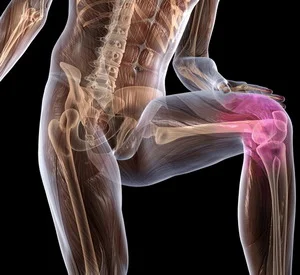
Arthrosis (Deforming osteoarthritis, DOA) is a chronic degenerative-dystrophic disease of the joints. It is based on the initial degeneration of articular cartilage, followed by changes in the bone articular surfaces and the development of marginal osteophytes (bone spines). In the future, these changes lead to joint deformation, and sometimes to the development of moderate synovitis.
The outdated term "arthrosis-arthritis" means arthrosis in the acute stage.
Only according to official statistics, joint arthrosis 10% of the total population is affected, mainly women aged 40-60 years. Moreover, at the age of 55 years, osteoarthritis is registered in 80% of people, and at 60 years old - in almost 100%.
Causes of arthrosis (etiology)
Depending on the cause of the disease, arthrosis is divided into primary and secondary.
Primary osteoarthritis (idiopathic) - develops in initially healthy articular cartilage under the influence of chronic overload of the joint. The reasons for it are not completely known. The main presumed development factors are: increased mechanical load on the articular cartilage or a hereditary predisposition (reduced resistance of the articular cartilage to mechanical loads). In this case, the interaction of external and internal predisposing factors plays an important role.
- external factors: injuries and microtraumatization of the joint, functional overload of the joint, hypermobility of the joint, intoxication of the body (nitrates, heavy metal salts, herbicides, alcohol), previous viral infections, unbalanced nutrition
- internal factors: developmental anomalies of the musculoskeletal system and static disorders (scoliosis, flat feet, dysplasia), excess body weight,
Secondary osteoarthritis - develops in previously pathologically altered articular cartilage, even under normal joint loads. Articular cartilage becomes pre-pathologically altered due to joint injuries, inflammatory diseases of the joints (rheumatoid arthritis, infectious arthritis, etc.), as well as diseases of the joints due to circulatory disorders (for example, aseptic necrosis), endocrine diseases (diabetes mellitus, acromegaly, etc.) .d.), metabolic disorders (gout, hemochromatosis, etc.).
Mechanism of arthrosis development (pathogenesis)
Under the influence of causal factors, earlier and faster “aging” of all elements of the joint occurs: articular cartilage, bone joint ends, articular capsule, periarticular ligaments and tendons.
Metabolism of articular cartilage is disrupted, first of all, there is a loss and change in the properties of fibers (elastic and collagen), the ground substance and cartilage cells (chondrocytes). The cartilage loses its elasticity, first in the central part, becomes rough, becomes loose, cracks appear in it, the underlying bone is exposed, and later the layer of articular cartilage may completely disappear.
The decrease and disappearance of shock absorption under pressure onthe articular surface of bonesleads to their compaction (subchondral osteosclerosis) with the formation of areas of ischemia, sclerosis, and cysts (cavities). At the same time, along the edges of the articular surfaces of the epiphyses, cartilage grows compensatoryly, and then ossification occurs - marginal osteophytes are formed. This increases the area and reduces the pressure per unit area of the articular surface.
The presence of cartilage fragments in the articular cavity, phagocytosed by leukocytes with the release of lysosomal enzymes (cytokines), leads to periodic synovitis, and with repeated relapses - to fibrotic changes in the articular capsule. p>
Currently, the role of autoimmune processes in the pathogenesis of deforming osteoarthritis, which stimulate catabolic processes and damage to articular cartilage, has been shown.
Diagnostics of arthrosis
Main complaints with arthrosis
joint pain or discomfort
- mechanical type - occur when the joint is loaded (more in the evening), subside at rest (and at night). Caused by trabecular microfractures, bone venous stasis and intramedullary hypertension, irritation of surrounding tissues by osteophytes, spasm of the periarticular muscles.
- "vascular" type - dull pain that occurs at night and disappears with morning activity. Caused by venous stasis in the subchondral regions.
- "starting" type - appear during the first steps, after a period of rest, then disappear and reappear with continued load. May be a sign of reactive synovitis.
- “blockade” type - periodically occurring sudden sharp pain at the slightest movement, caused by “jamming” of the joint by the articular “mouse” (pinching of a piece of necrotic articular cartilage between the articular surfaces). The pain disappears with a certain movement leading to the elimination of the pinched mouse.
persistent deformation of the joints - caused by deformation and subluxation of the articular ends.
dysfunction of the joints - limitation of the range of motion characteristic of the joints.
sound phenomena - crunching, crepitus, clicks during movements.
Laboratory data for arthrosis
General blood test and general urine test showed no abnormalities.
With reactive synovitis, an increase in ESR to 20-25 mm/h may be observed in the blood, as well as an increase in the content of fibrin, seromucoid, sialic acids, and haptoglobin.
X-ray examination for arthrosis
In most cases, X-rays of the joint are taken in 2 standard projections (direct and lateral). Sometimes they are supplemented with non-standard projections.
X-ray allows you to determine the stage of arthrosis.
