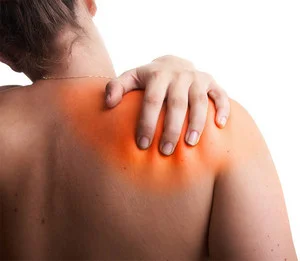
Periarthritis orperiarthrosis(from ancient Greek περι - around, about, ἄρθρον - joint) is a whole series of periarticular (extra-articular) diseases of soft tissues (i.e. soft tissues surrounding the joint and participating in its functioning - muscles, ligaments, tendons at the points of attachment, synovial bursae).
These are inflammatory-degenerative diseases of the periarticular soft tissues, characterized by dystrophic changes in these soft tissues with subsequent reactive inflammation, as well as the possible formation of ossifications (areas of calcification). In this case, intra-articular structures are not involved in the pathological process.
The difference in terminology is due to the fact that the disease occurs in stages, sometimes with a predominance of aseptic inflammation (periarthritis), and sometimes with degenerative-dystrophic changes (periarthrosis).
Prevalence of periarthritis (periarthrosis)
Inflammatory and degenerative diseases of soft tissues of various localization in orthopedics and rheumatology account for about 25% of all extra-articular lesions of the musculoskeletal system. Among them, the most common is glenohumeral periarthritis; Periarthritis of the wrist, elbow, hip, knee, ankle, and foot joints is somewhat less common.
The most common types of periarthritis (periarthrosis)
Depending on the location of pathological foci, they are traditionally distinguished as separate diseases:
- humeral periarthritis
- lateral (tennis elbow) or medial (golfer's elbow) epicondylitis
- styloiditis
- trochanteritis
- Pellegrini-Stied disease
Causes and mechanism of development of periarthritis and periarthrosis (etiology and pathogenesis)
There are 2 main theories:
- primary changes in the spine (intervertebral disc) - a reaction of irritation from the autonomic nervous system as a result of chronic compression of the spinal nerve root, leading to neurodystrophic changes and reflex circulatory disorders in the places of attachment of fibrous tissue to bone protrusions.
- primary changes in the site of the disease - as a result of acute injury or overstrain of muscles in the places of their attachment to bone protrusions (single-stage or chronic - microtraumatization of soft tissues occurs (tears, hemorrhages)), their aseptic inflammation develops, which entails irritation of peripheral receptors.
In addition, diseases (myocardial infarction, angina pectoris, pulmonary tuberculosis, diabetes mellitus, head injury, Parkinson's disease), as well as some operations (mastectomy) that disrupt microcirculation in the shoulder joint, can lead to the development of glenohumeral periarthritis.
Prolonged cooling, congenital fibrous dysplasia, and arthropathy are contributing factors.
In tissues with insufficient vascularization, foci of necrosis are formed, which subsequently undergo scarring and calcification, as well as aseptic inflammation.
Diagnosis of periarthritis (periarthrosis):
The main complaints for periarthritis (periarthrosis):
For pain in the joint area and associated movement restrictions.
Upon palpation, local areas of pain are determined, corresponding to inflamed soft tissue anatomical structures.
Laboratory tests for periarthritis (periarthrosis):
In the acute phase, changes in the blood are characteristic - an increase in ESR and CRP.
X-ray examination for periarthritis (periarthrosis):
An X-ray of the diseased joint and the corresponding part of the spine is taken.
Typically, radiological changes are detected in advanced chronic forms of periarthritis (periarthrosis). Typically, they are characterized by periarticular deposits of calcium microcrystals (ossification or calculous bursitis); local osteosclerosis and osteoporosis can also be determined.
Other instrumental studies for periarthritis (periarthrosis):
To clarify the diagnosis, an ultrasound or MRI of the joint can be performed.
Invasive diagnostic methods (arthrography, arthroscopy) are justified when deciding on surgical treatment.
